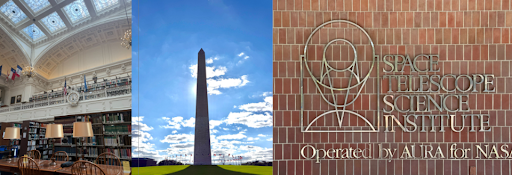
Paige’s Experience: Space Telescope Science Institute via SPS internship program.
REU & SUMMER EXPERIENCE LIBRARY
-
REU & SUMMER EXPERIENCE LIBRARY -
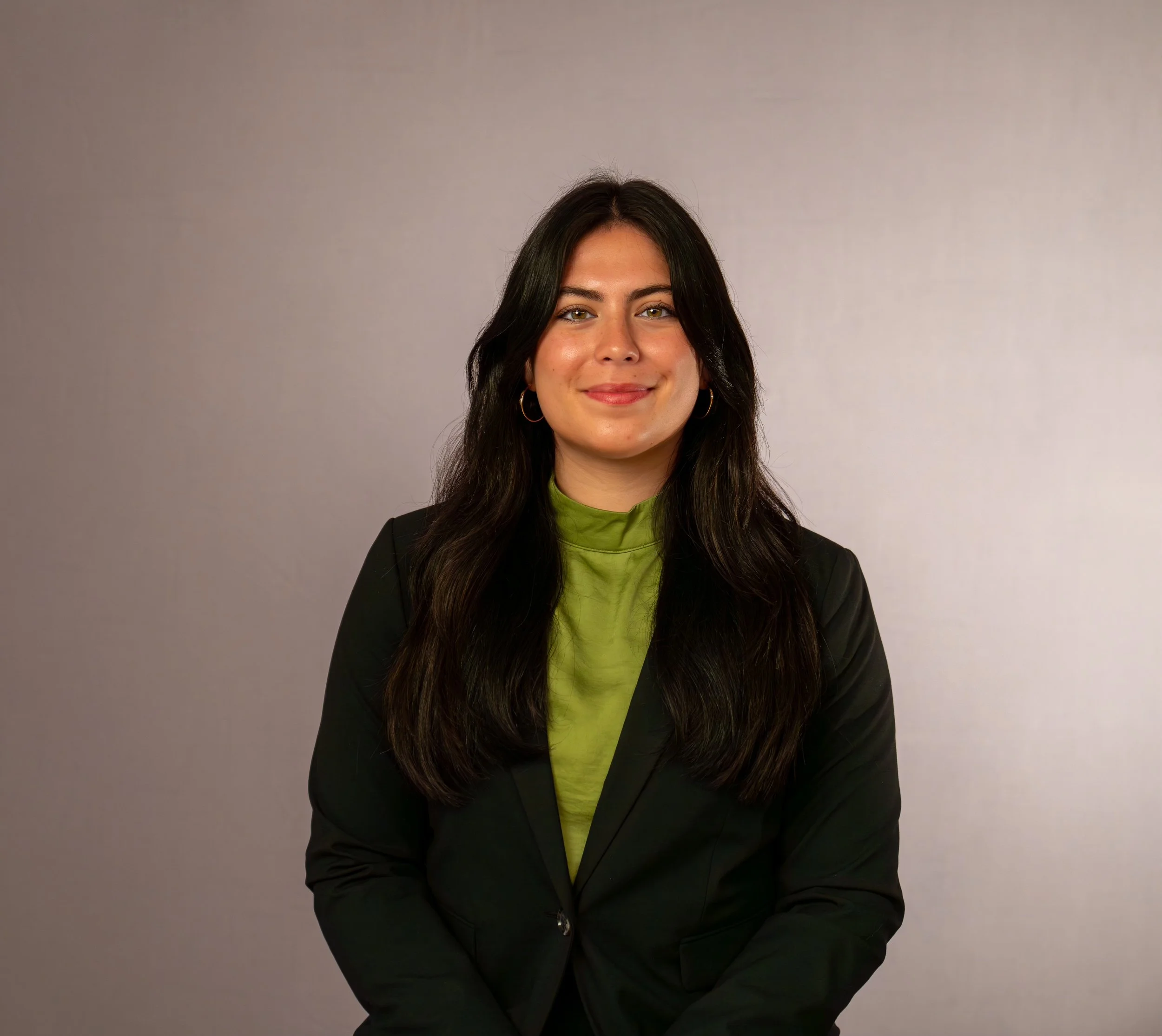
Name: Paige Nolan
Year: Incoming Junior at the University of Maryland Studying Physics & Astronomy
Experience: Space Telescope Science Institute via SPS internship program.
1. What REU did you participate in, and when did you participate?
I participated in the AIP-SPS Internship Program. I’m currently a junior at the University of Maryland double majoring in Physics and Astronomy. There were 13 interns in the program, and we were all placed at different locations around the DMV area. I was placed at the Space Telescope Science Institute in Baltimore, while other interns worked at places like NIST and the Department of Defense.
2. What was your academic background when you applied?
I already had coding experience in Python, but my only research experience was through my coursework. In my observational astronomy class, I did a research project using my school’s telescope. I definitely went into the internship as a beginner researcher though. The internship helped me gain a lot of confidence and actually start feeling like an astronomer.
3. What was your research project, and what question were you trying to answer?
I worked under Dr. Nimisha Kumari studying NGC 625, which is a local analog of high-redshift galaxies. It’s considered a local analog because it’s a blue compact dwarf galaxy, so studying it can help us understand what galaxies in the early universe may have been like. I used spectral and optical data from MUSE on the Very Large Telescope, and my project mainly focused on the metallicity of the main H II regions of the galaxy, which could tell us more about high-redshift galaxies.
4. What did the actual research look like day-to-day, and where did most of it happen?
I worked remotely most of the time, and most of my research was computational, so there was a lot of coding and data reduction. At first, I was working with data from Gemini South and needed to reduce it using Gemini’s reduction pipeline. Halfway through the internship, I switched my focus more toward the MUSE data.
A lot of my days were spent trying to reduce the Gemini South data, reading published articles about my galaxy and taking notes. Once I focused more on the MUSE data, I would make plots and look at a bunch of different emission lines. At first, I was really nervous when I couldn’t figure things out right away, but I learned that it’s okay to make mistakes and not immediately know what you’re doing.
5. How independent was your research, and who did you work with?
My work was pretty independent. I met with my mentor once a week and would also send updates through email. If I needed more help, we could always meet more than once a week.
6. Did you already have the skills you needed, or did you learn them during the REU?
Before the summer, I wasn’t very confident in my skills. I didn’t have that much research experience, and I felt like a lot of my peers already had research positions and experiences while I wasn’t there yet. As I went through the internship, I learned more about the data analysis and techniques I needed, and actually putting those skills into action helped me gain more confidence in myself as a researcher.
7. How often did you interact with your mentor, and what did mentorship look like?
At the beginning of the internship, a lot of our meetings were my mentor explaining what she does and introducing me to concepts I hadn’t heard of before. As we progressed, she taught me how to use DS9 and a bunch of other applications and websites that I needed for my research. Toward the end, there was a lot of reviewing and fixing up my final presentation. She would ask me questions so I could explain what I knew. If she asked me something I didn’t know or couldn’t answer, she would help me work through it.
8. How structured was the program outside of research? Were there workshops, seminars, professional development activities, or social events?
The SPS internship had a lot going on outside of our individual research. There were so many networking opportunities. We got to meet AIP board members at a really fancy hotel in Baltimore and learn about what they did with their physics degrees. It was really interesting seeing all of the different paths people had taken. We also had workshops on things like interviews and got to meet AIP employees who talked about their career journeys, including things like gaps in their resumes and how their careers developed.
9. Did you get to know your cohort? What was the social environment like?
Yes. One unique part of the SPS internship was that even though all of us worked at different places, we were all housed together in DC. We were assigned roommates, lived on the same floor, and had an intern group chat. We would also do things together outside of work, like going to museums around DC.
10. What was housing like?
We were housed at George Washington University in apartment-style dorms. I had my own room, and we had our own bathroom and a shared common space with a kitchen.
11. What was transportation like? Did you need a car?
I didn’t need a car because the Metro system was really easy to navigate. We had to pay for our own Metro cards, but the program reimbursed us for work-related transportation. Since I lived in DC and worked in Baltimore my commute could be around two hours whenever I had to go in person, so I definitely dreaded the commute sometimes.
12. Was the stipend enough? Were there expenses you weren't expecting?
I felt well compensated for the work I did. The program also reimbursed us for work-related travel, which helped with transportation expenses.
13. What was the most challenging part of your REU?
The most challenging part was trying to figure out how to use the Gemini reduction pipeline. I had to use the command line, which was completely new to me. I kept going through the online manual, example code, and my mentor’s code trying to figure it out. I wasn’t able to completely figure everything out during the summer because certain things just wouldn’t match up. Some of the fibers were missing, and there were hundreds of them that I had to look through to figure out which ones were missing. It was very tedious and frustrating, but I’m continuing the research, so I’ll be able to keep working with the Gemini data.
14. Did your research lead to anything after the summer?
I presented my research at a symposium at the end of the internship. I’m also continuing the research over the next two semesters with Dr. Kumari, and I will also be working with Dr. Sylvain Veilleux at UMD. We’ll continue working on the metallicity and the Gemini data once I’m able to reduce it. We’re planning to eventually write up the research for a paper. Also, fun fact, John Mather was at the research symposium!
15. What advice would you give a student applying to an REU?
Network and don’t be afraid to reach out to people. I was able to speak with people involved in the internship before I even applied. I had a coffee chat with my mentor the year before applying, and I also reached out and had a coffee chat with someone at AIP. Reaching out for those kinds of conversations is a good thing because when it comes time to apply, they can actually put a face to your name.