REU & SUMMER EXPERIENCE LIBRARY
-
REU & SUMMER EXPERIENCE LIBRARY -
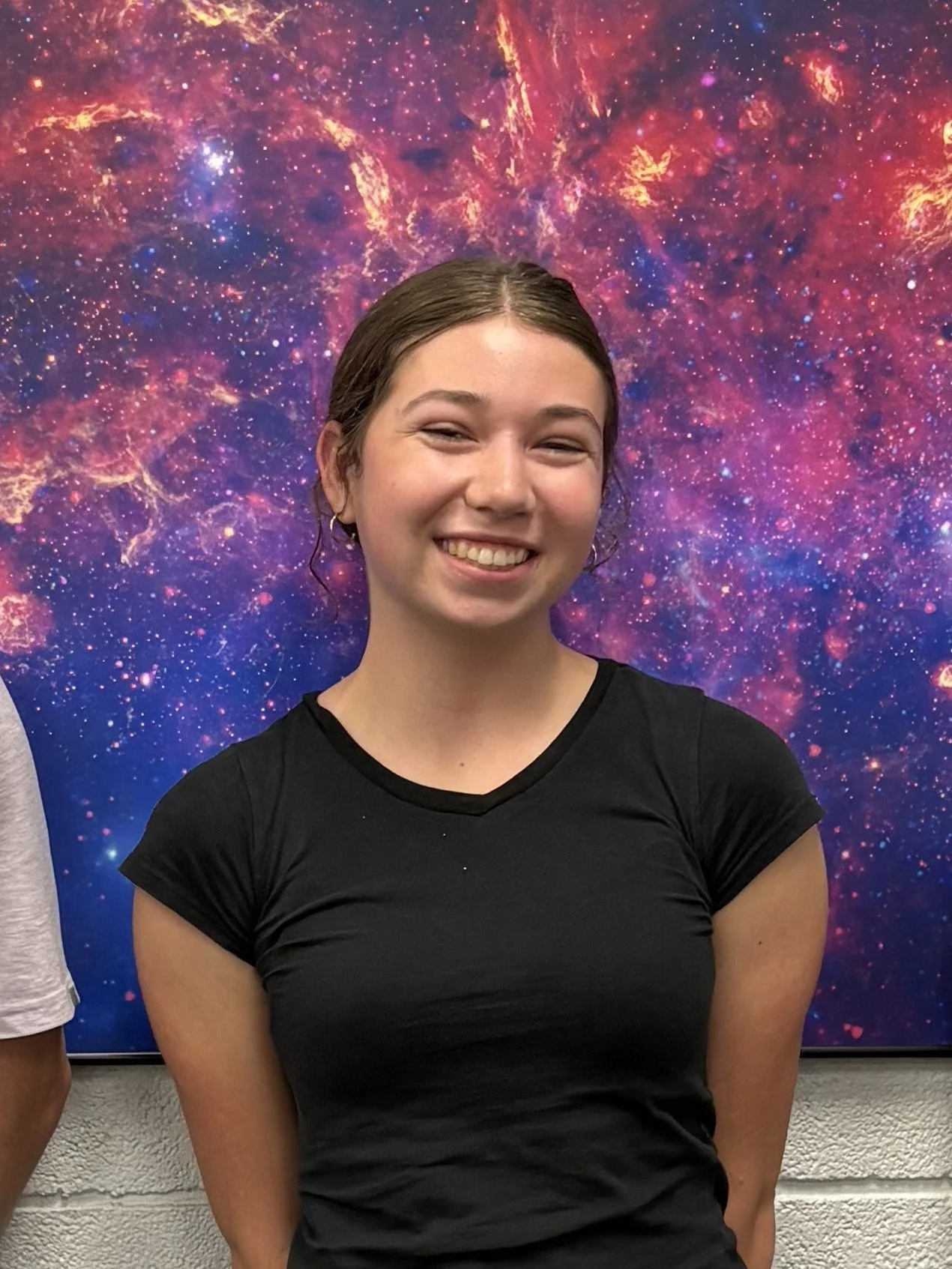
Name: Kaylene Castle
Year: Junior in Physics & Astrophysics at Northern Arizona University
Experience: University of Florida SURF REU
1. What REU did you participate in, and when did you participate?
This summer I participated in the University of Florida REU. I had just finished my second year and was going into my third year studying Physics/Astrophysics.
2. What was your academic background when you applied?
When I applied, I had taken a coding class, but it was in a different language than what I ended up using during the internship, so I had to pick up a lot along the way. The summer before, I had also done a two-week asteroid materials research experience. It wasn’t paid, but they covered lodging, and it was more of a short research-intensive experience. Additionally, I didn’t have any experience with exoplanets before this REU.
3. What was your research project, and what question were you trying to answer?
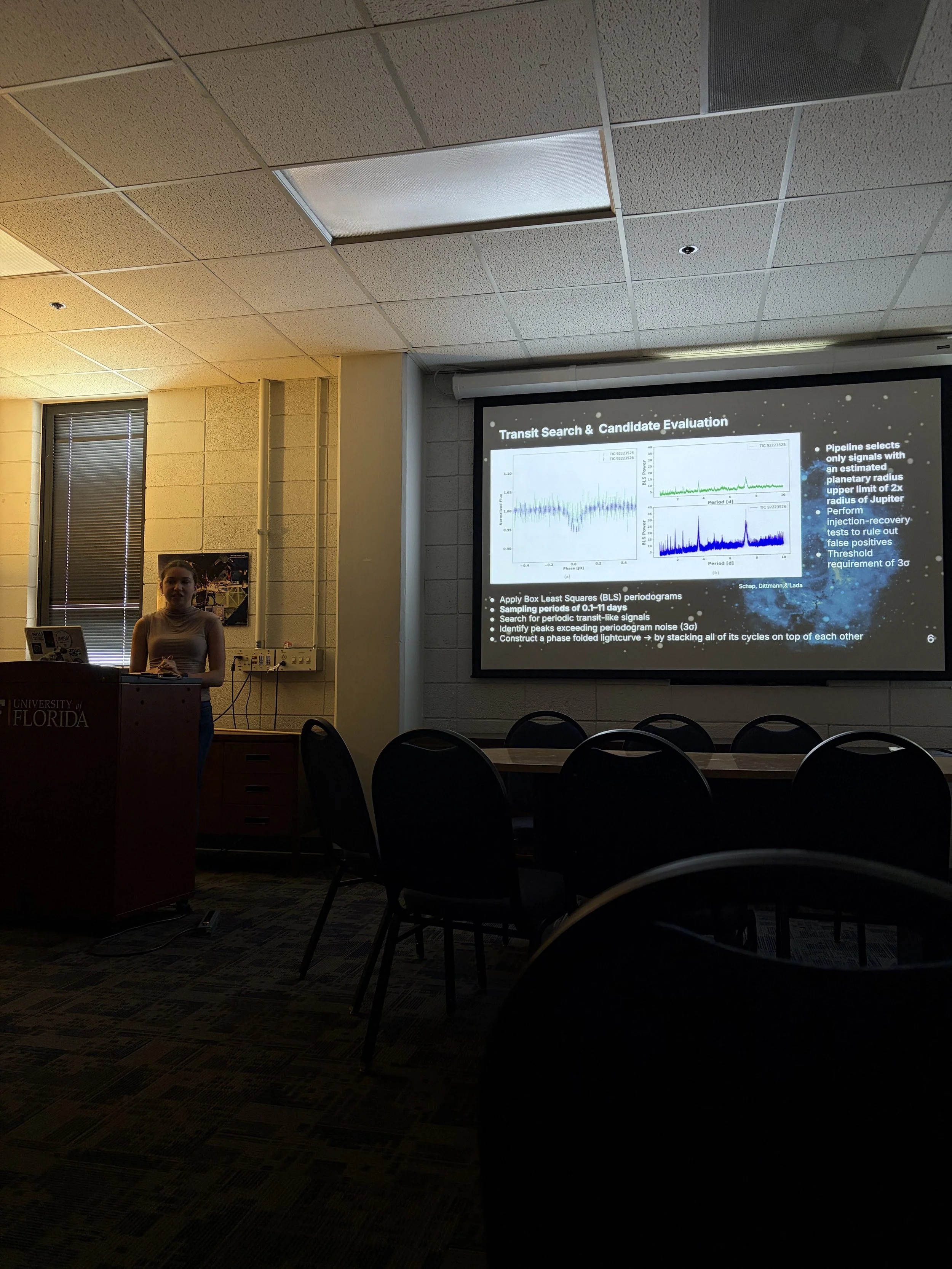
I was looking at a stream in the Milky Way that was accreted into the galaxy, so the stars in that stream are of extragalactic origin. I used TESS photometry to search the Milky Way’s Helmi stream for an extragalactic planet. To do this, I used Python and a package called TESS-Gaia Lightcurve.. I’d get the raw flux data from a star and fit it with a model that allowed us to view the light curve and adjust different parameters to match it. I also learned what MCMC was and how to use it to fit my data and get the parameters we needed.
4. What did the actual research look like day-to-day, and where did most of it happen?
I met with my advisor twice a week, usually in the morning, to go over what I had done. Most days, I was on my computer coding for hours and hours, and a lot of my time was also spent reading papers. The university had a journal club that we could go to too. We could work from pretty much anywhere. I could work in a coffee shop or go into the office. When we were in the office, we were all in one room together working. We actually had to be in the basement because the fourth floor, where we were originally supposed to work, was under construction. The room was set up in a circle, so we could all see each other.
5. How independent was your research, and who did you work with?
I had my main mentor, but I also had access to a postdoc who did similar research and knew how to do a lot of the things I was learning. It was helpful having someone else I could go to when I needed help in addition to my mentor.
6. Did you already have the skills you needed, or did you learn them during the REU?
It was definitely a mix of applying skills I already had and learning new ones. Presenting was something I was already used to, but coding in a new language was something I had to learn during the summer.
7. How often did you interact with your mentor, and what did mentorship look like?
I met with my advisor twice a week to go over my progress, talk about what I had been working on, and figure out my next steps. I also had access to a postdoc who worked on similar research, so I had multiple people I could go to when I had questions.
8. How structured was the program outside of research? Were there workshops, seminars, professional development activities, or social events?
We had weekly meetings outside of our regular research. We talked about things like ethics in research and the best ways to read and digest a research paper. There were around ten scheduled professional development activities throughout the program. Graduate students would also come in and give us advice and share their perspectives on graduate school and research.
9. Did you get to know your cohort? What was the social environment like?
Yes! Our program also partnered with the Engineering REU, so we got to interact with an even larger group of students. We had graduate student mentors, ice cream socials, and trips with the larger REU group. We went to places like beaches and national parks, so there were a lot of opportunities to spend time together outside of research.
10. What was housing like?
We were housed in an on-campus apartment, and it definitely had its pros and cons. The apartment itself was nice, but the location wasn’t the best because we were all the way across campus from our office. Luckily, the campus bus system came in clutch.
11. What was transportation like? Did you need a car?
The on-campus shuttle system was pretty reliable, so you didn’t necessarily need a car for getting around campus. Getting around outside of campus was a little tougher, though, and the buses usually came in 30 to 40-minute intervals.
12. Was the stipend enough? Were there expenses you weren't expecting?
The stipend was good. We received a decent amount, and it was definitely enough to support me throughout the summer.
13. What was the most challenging part of your REU?
Before this, I had never had a full research experience where I was working on a structured research project for an entire summer. Managing my time while also making consistent progress on my research was probably the most challenging part. It was definitely more fast-paced than I expected, especially at the beginning while I was still learning everything.
14. Did your research lead to anything after the summer?
A lot of people in my cohort had the opportunity to continue with their research and present at AAS. I chose not to go that route and decided to continue pursuing my interests personally instead.
15. What advice would you give a student applying to an REU?
Mindset is really important. It can be easy to think, “I got this opportunity over other people, and I don’t think I’m ready for it.” But you have to remember that you’re there to learn. You don’t have to come into an REU already knowing everything. It’s an opportunity to learn, build your skills, and figure things out as you go.