REU & SUMMER EXPERIENCE LIBRARY
-
REU & SUMMER EXPERIENCE LIBRARY -
Name: Kya Aranha
Year: Junior at Rensselaer Polytechnic Institute studying Physics
Experience: Northwestern CIERA REU
1. What REU did you participate in, and when did you participate?
I participated in the CIERA Research Experiences for Undergraduates (REU) program at Northwestern University during the summer between my sophomore and junior years.
2. What was your academic background when you applied?
I was a general Physics major at Rensselaer Polytechnic Institute (RPI). At the time, I had only taken one astrophysics course and didn't have any previous research experience. I did have some background in coding, but I was still relatively new to astrophysics research.
3. What was your research project, and what question were you trying to answer?
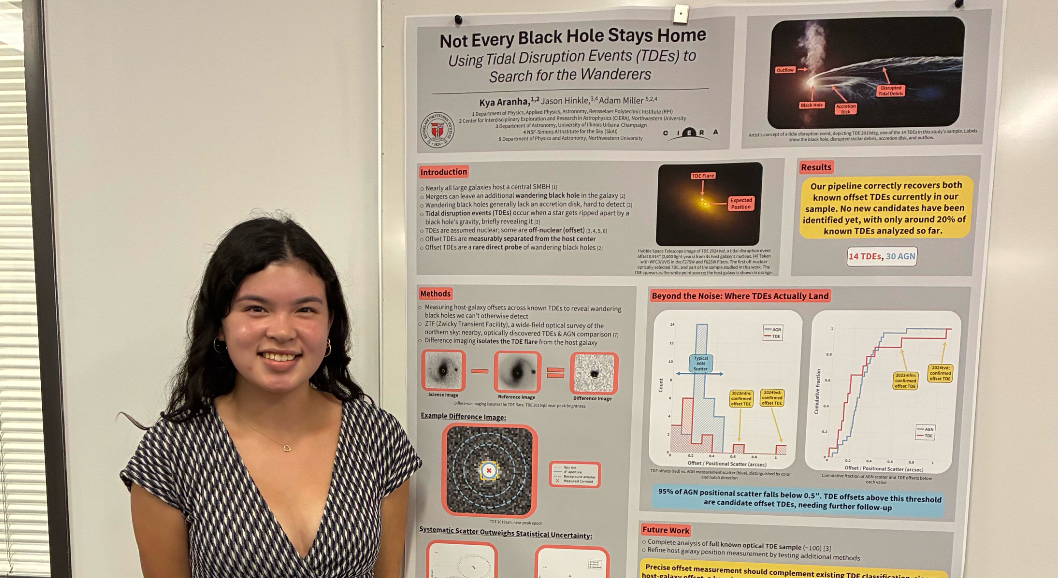
My research focused on tidal disruption events (TDEs), which occur when a star gets too close to a black hole and is torn apart by its gravitational forces. More specifically, I was interested in the population of offset TDEs, which are events that appear away from the centers of their host galaxies. Using publicly available imaging data from the Zwicky Transient Facility (ZTF), a wide field astronomical survey, I investigated how common these offset events might be by more carefully measuring the positions of known TDEs (including those not previously flagged as offset).. As more off-center TDEs are being identified, we wanted to better understand how many might exist in the broader universe and whether there were any patterns in where or when they occur.
4. What did the actual research look like day-to-day, and where did most of it happen?
The research schedule was pretty flexible, and I was able to work from home when needed. We had daily meetings, workshops around midday, and research group meetings throughout the week. At first, I was nervous in the full group meetings because I was surrounded by graduate students who had much more experience than I did. However, those meetings helped me practice explaining my research to people who weren't necessarily experts in my specific topic. I also had one-on-one meetings with my mentor, where I could receive more direct guidance and ask questions.
5. How independent was your research, and who did you work with?
I worked closely with my research mentor, but he really encouraged me to figure things out on my own. Rather than immediately giving me the answers, he wanted me to work through problems independently and develop my own understanding of the research. I still had support whenever I needed it, but I was encouraged to take ownership of my work.
6. Did you already have the skills you needed, or did you learn them during the REU?
I definitely learned a lot during the REU, especially when it came to skills outside of the technical research itself. I gained experience reading scientific papers, presenting research, and communicating complicated ideas to different audiences. A lot of my growth came from learning how to approach research more independently and becoming more comfortable talking about my work.
7. How often did you interact with your mentor, and what did mentorship look like?
At the beginning of the internship, a lot of our time was spent going over my mentor's research and introducing me to concepts I hadn't encountered before. As the summer progressed, he taught me how to use different tools and resources, including DS9, an astronomical imaging application, along with other websites and programs that were useful for our research. We also spent a lot of time reviewing and improving my final presentation. One thing I appreciated was that he would ask me questions about my research to see how well I understood it. If I couldn't answer something, he would help me work through it rather than just telling me the answer. That really helped me become more confident in what I was doing.
8. How structured was the program outside of research? Were there workshops, seminars, professional development activities, or social events?
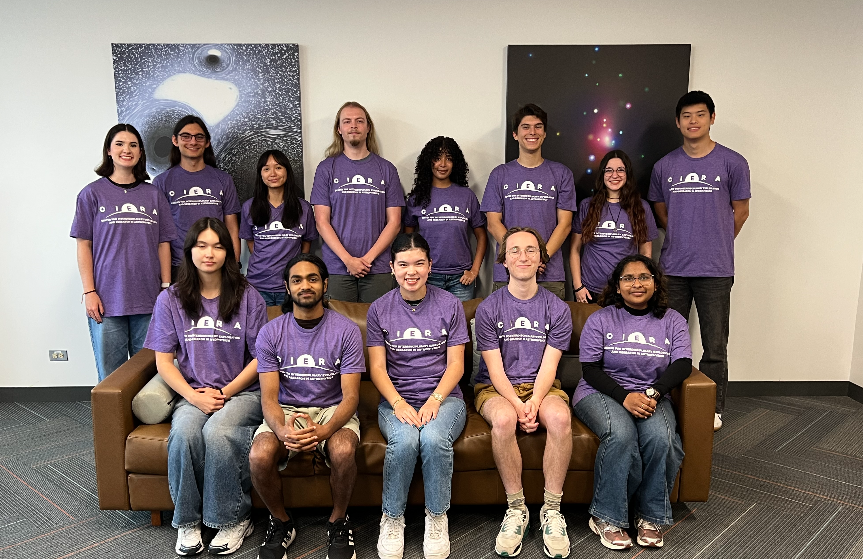
The program had a lot of structure outside of our individual research projects. During the first two weeks, we had workshops almost every day, including sessions on coding and using the terminal. After that, we typically had workshops on Mondays and Tuesdays, research seminars on Thursdays, and cohort meetings on Fridays. There were 13 of us in the cohort, so those Friday meetings gave us a chance to come together outside of our individual research groups.
9. Did you get to know your cohort? What was the social environment like?
We definitely got to know each other, but I would say everyone was also pretty independent. We talked and spent time together, but we weren't necessarily hanging out all the time. Everyone had their own research projects and schedules, so there was a balance between spending time with the cohort and doing our own things.
10. What was housing like?
Northwestern provided dorm housing for us, which was really convenient. We were all housed along the same hallway, so it was easy to see each other and spend time together. The dorms were nice, and we had air conditioning, which was definitely appreciated during the summer.
11. What was transportation like? Did you need a car?
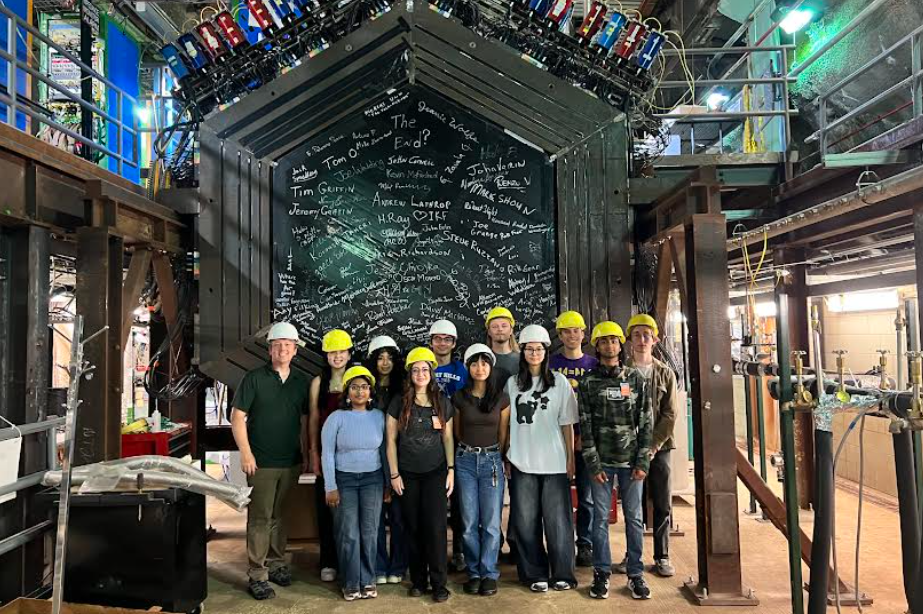
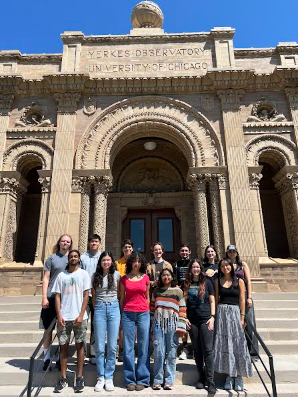
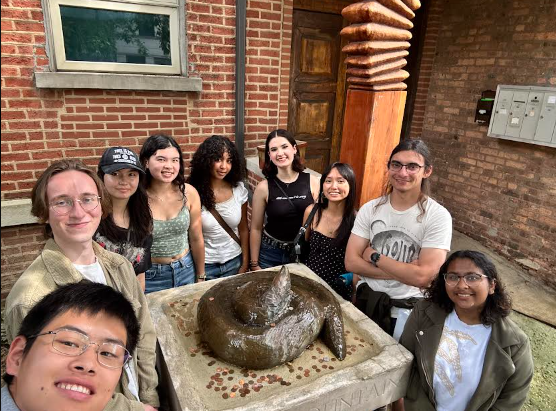
You definitely didn't need a car. Chicago has great public transportation, and the area was pretty walkable, so getting around wasn't difficult. What we did outside of research varied from week to week. We visited museums, explored the area, and had some planned CIERA REU field trips on weekends. Two of the places we visited were Fermilab and Yerkes Observatory, which were really cool opportunities to experience other science institutions.
12. Was the stipend enough? Were there expenses you weren't expecting?
I definitely felt like we were paid enough. The program also provided meals, which helped with food expenses. Between the stipend, provided housing, and meals, I felt pretty comfortable financially throughout the summer.
13. What was the most challenging part of your REU?
One of the biggest challenges for me was learning how to be okay with receiving constant feedback. At first, I sometimes took feedback pretty harshly, especially when I had put a lot of effort into something. Throughout the summer, I was challenged in a lot of different ways, and I had to learn that feedback is just part of the research process. It doesn't necessarily mean you're doing something wrong. Sometimes it just means there's room to improve, and learning to accept that was an important part of my experience.
14. Did your research lead to anything after the summer?
Yes! At the end of the program, we had several opportunities to present our research. We first presented at a local planetarium to members of the general public, which was a great experience because we had to explain our work in a way that people without an astrophysics background could understand. The next day, we presented to CIERA faculty, and we also had an opportunity to present our research to our families over Zoom. My research didn't end when the summer was over, either. I continued working on the project into the fall semester, with plans for a first-author paper. I also received funding to attend the American Astronomical Society (AAS) meeting in January.
15. What advice would you give a student applying to an REU?
Just go for it! I remember feeling really discouraged when I was applying because I kept comparing myself to other students. I didn't have any previous research experience, and I wasn't sure if I had a chance of getting accepted. I ended up applying to a lot of programs because I genuinely didn't think I would get into one. My biggest advice is to be confident in yourself and your application. Think carefully about how you present your experiences and how you can leverage the skills you already have, even if they don't come from formal research. Don't count yourself out before you've even applied.