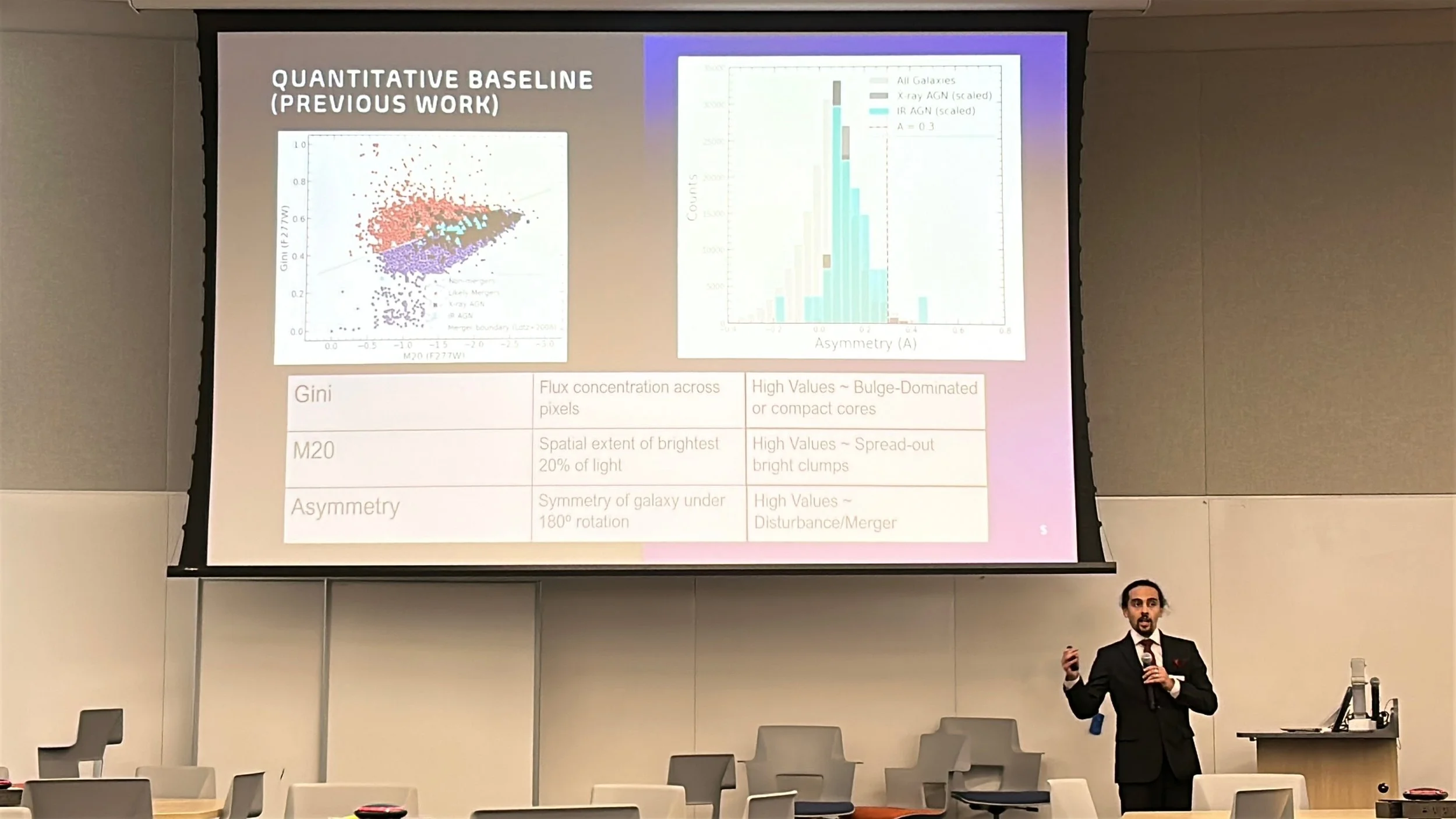
Brett’s Experience: NASA Space Grant Summer Undergraduate Research Fellowship through Rochester Institute of Technology’s College of Science.
REU & SUMMER EXPERIENCE LIBRARY
-
REU & SUMMER EXPERIENCE LIBRARY -
Name: Brett Renaud
Year: Rising Fifth Year in the Accelerated BS/MS Physics Program at Rochester Institute of Technology
Experience: NASA Space Grant Summer Undergraduate Research Fellowship through Rochester Institute of Technology’s College of Science.
1. What REU/Summer Program did you participate in, and what year did you participate?
I participated in the NASA Summer Undergraduate Research Fellowship through Rochester Institute of Technology’s College of Science. It was a little different from a traditional REU because it was more of an internship/stipend-based fellowship. I submitted a research proposal and received funding through NASA Space Grant to work on the project over the summer.
2. What was your academic background when you applied?
When I applied, I was in my fourth year of a five-year accelerated BS/MS physics program. I had already been doing research in extragalactic astrophysics for about two years.
3. Why did you apply to this particular program?
I applied because it gave me the opportunity to receive funding to continue working on my research over the summer.
4. What was your research project, and what question were you trying to answer?
My project focused on galaxies with active galactic nuclei, or AGN. These galaxies had previously been studied using quantitative morphology measurements, measuring how clumpy the light in a galaxy is. I compiled those galaxies and used JWST images to look at their morphologies visually and compare what we saw to the quantitative measurements. I also used Zooniverse so that groups of people could visually classify the galaxies.
5. What did a typical day or week look like?
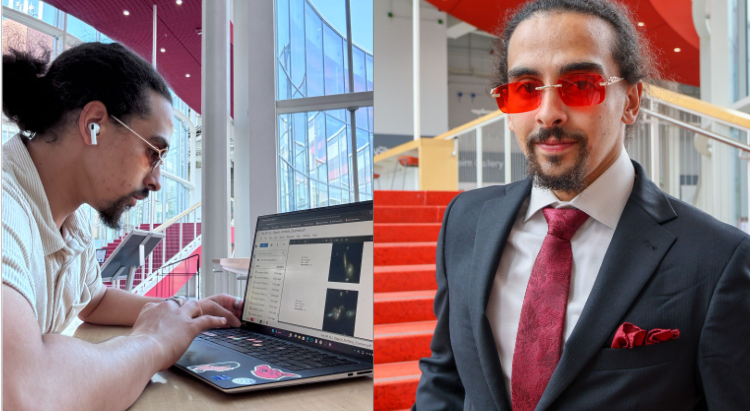
My research was completely computational, so most of my time was spent working with code and data. I worked on getting Zooniverse set up, generating cutouts of the galaxies, working with different filters, and creating RGB images. I also incorporated those images into my own code so I could compare galaxies with and without AGN and look at things like clumpiness, morphology, redshift, and stellar mass. A lot of the work was also troubleshooting. Sometimes I would have an RGB image that was way too green, or I would have to find the correct file path or work through gigabytes of data. A lot of research was really just going through the code and figuring out why something wasn't working.
6. Where did most of your research happen?
Most of my research was computational, so I was primarily working at my computer.
7. How much of your project was independent versus guided by your mentor or research group?
My project was pretty independent. At the beginning, my advisor would assign me papers and get me started with the data. From there, it became more about trying things out and getting feedback. I could go to my advisor and say, “What if I do this?” or “What if I try this?” and they might give me things to try out. My advisor gave me tips and guidance but also gave me room to figure things out myself, which allowed me to grow more as a researcher.
8. Did you work primarily one-on-one with a mentor, as part of a larger research group, or mostly independently?
I did a lot of the work independently, but I met with my advisor primarily in person. My advisor also had group meetings where we would give research updates and personal updates.
9. Did you have prior experience with the skills your project required?
I had started working with coding during the spring of my third year, so I already had some experience with Python, Astropy, and Pandas. I had also taken a computational programming course in physics, but a lot of my Python experience came from learning independently on the side because I was interested in it. Over time, I got better and better at Python. This project also had its own learning curve because I had to learn how to work through datasets like JWST data and become more comfortable using the command line.
11. How structured was the program outside of your individual research?
It wasn't very structured compared to another summer research program I had done the year before. For this fellowship, I applied for the funding, received it, completed my research, and presented at the symposium. Because there weren't as many structured activities, I had the flexibility to take on other things during the summer.
12. What were housing and expenses like?
I had to figure out funding for summer housing. I was able to get funding through my Pell Grant to help pay for housing, which worked out for me.
13. What surprised you most about the experience?
I learned that a summer goes by really fast. I also realized that my capacity had increased a lot compared to the year before .Because this program wasn't as structured, I was able to take on more responsibilities alongside my research. I was also a GTA and a tutor for the math department during the summer.
14. What advice would you give a student interested in this type of research?
If you're interested in galaxies in general, there are so many different aspects of a galaxy that could pique your interest. There’s gas, dust, stars, black holes, etc. There really isn't much you can't learn from studying a galaxy. If you're interested in AGN specifically, you can zoom in even further and study the supermassive black hole or the gas and dust around it. There are so many different directions you can take galaxy research.