urwa’s Experience: Cornell University Astrophysics & Planetary Science REU
REU & SUMMER EXPERIENCE LIBRARY
-
REU & SUMMER EXPERIENCE LIBRARY -
Name: Urwa Faraz Malik
Year: Incoming Mechanical Engineering Transfer Student at Cornell University & 2026 Jack Kent Cooke Scholar
Experience: Cornell University Astrophysics & Planetary Science REU
1. What REU did you participate in, and what year did you participate?
The first and only REU I applied to was Cornell in January 2026. I didn't realize how competitive REUs were until I started going through the application process. For this program, only about 12 students were selected out of around 800 applicants.
2. What was your academic background when you applied?
I attended Kingsborough Community College and graduated as the valedictorian of my class. While I was there, I worked as a work-study student. Additionally, I was an Engineering Science major and had taken Advanced Physics I/II. I was always more interested in physics and knew that I eventually wanted to work at NASA, but I decided that I wanted to pursue an engineering degree as well. I’m now starting mechanical engineering at Cornell this fall. When I applied, I didn't have any coding classes or previous coding experience. Python was completely new to me.
3. What was your research project, and what question were you trying to answer?
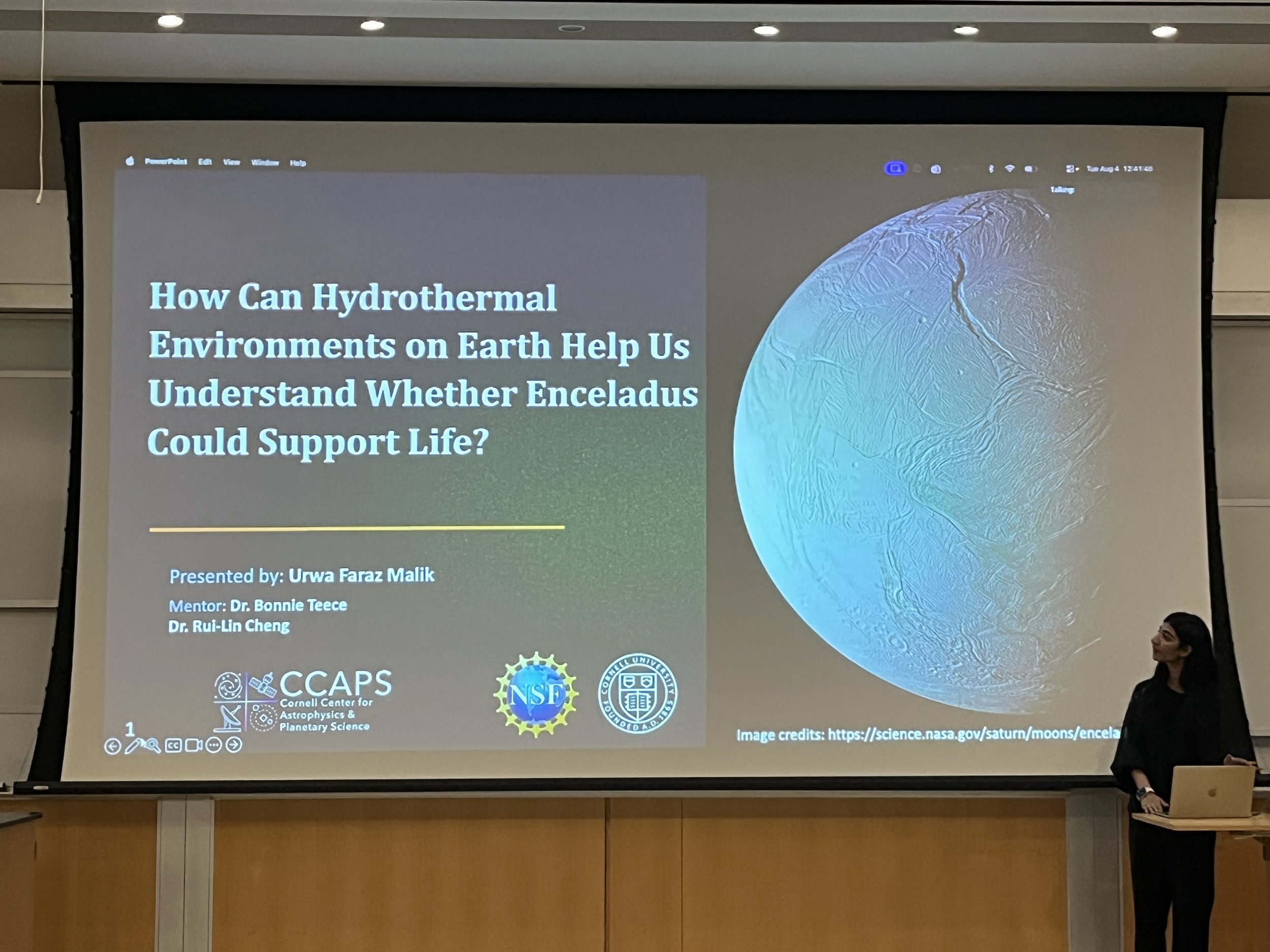
My project focused on Enceladus and whether its environment could potentially support life. My PI didn't have a traditional lab, so my research started with reading a lot of papers. During the first week, I read previously published research that my PI provided so I could understand Enceladus and the science behind the project. We looked at 16 hydrothermal vents on Earth and their geochemical properties, like pH, temperature, chloride concentration, and salinity, to see how they could help us understand conditions on Enceladus. I then used Python and principal component analysis (PCA) to visualize and compare those data. One of the challenges was that the Cassini mission only provided limited data from Enceladus, so we didn't have every variable we would have wanted for a direct comparison. Part of the research was figuring out what we could learn with the information that was actually available.
4. What did a typical day or week look like?
It felt like a mini PhD experience. I was responsible for making my own deadlines and keeping myself on track. I met with my mentor for about an hour once or twice a week. We would talk about my progress and what I needed to work on next, and then I would spend the rest of my time working independently. We also read papers every week and discussed them together. My mentor helped me learn how to dissect a research paper and understand what everything meant instead of just reading through it. During the week, my life was pretty studious. I spent a lot of time studying and working on my research, and then I would enjoy myself more on the weekends.
5. Where did most of your research happen?
My research wasn't in a traditional laboratory. Most of my work involved reading scientific literature, compiling data, and working at a computer using Python to analyze and visualize the data.
6. How much of your project was independent versus guided by your mentor?
My project was more independent. My mentor gave me guidance and helped me determine what I needed to work on, but I was responsible for creating my own deadlines and staying on top of my work. My mentor and I met weekly, and I also had access to her Postdoc as a resource. Independence was sometimes challenging because I had to learn how to keep myself on the right path and make sure I wasn't falling behind.
7. Did you have prior experience with the skills your project required?
I didn't have any previous coding classes or coding experience before the REU. I had to learn Python during the program. My mentor's graduate student helped me a lot with learning Python and taught me what I needed to know for the project. I also learned how to compile scientific data, create graphs, use PCA, and read research papers more critically.
8. Were there workshops, seminars, professional development activities, or cohort activities?
Yes. We usually had around two or three workshops every week, including workshops specifically focused on preparing our research posters. We also had opportunities to interact with students outside of the astrophysics cohort. For example, we spent time with the geology cohort and went on a geology tour where we visited waterfalls and had lunch together.
9. Did you get to know the other students? What was the social environment like?
Definitely, going from community college to a very large university was a big transition for me. I met people from many different universities, academic backgrounds, and stages of college. Some people were sophomores, while others were juniors or seniors. There were eight girls in my cohort, and we all lived in the same residence hall, so we became really close. There was plenty of time to interact with the cohort. We could go to cafés, spend evenings together, go on trips, or just hang out in the residence hall.
10. What was housing like?
We lived together in housing on campus. My cohort was in the same residence hall, which made it easy for us to become close and spend time together outside of research.
11. What was transportation like? Did you need a car?
I didn't need a car for my everyday research. It was about a 10-minute walk from our housing to where I worked.
12. Was the stipend sufficient? Were there unexpected expenses?
The stipend worked out to around $700 per week for the 10-week program. Housing was one area where I did have an out-of-pocket expense. We were given around $1,250 toward housing and meals. Housing itself cost $1,500 for the ten weeks, meaning I had to pay the remaining $250 out of pocket. Since the full housing allowance went towards rent, I was responsible for covering all of my food expenses separately.
13. What surprised you most about the experience?
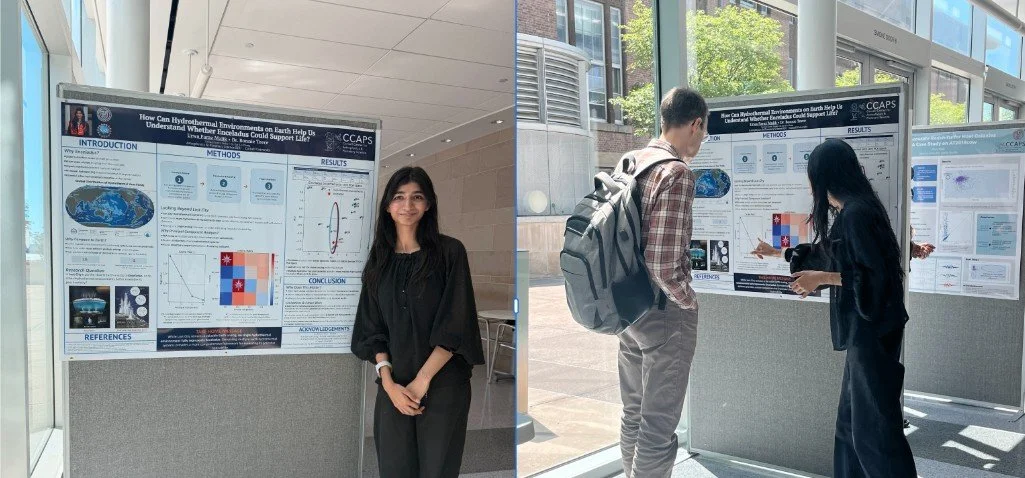
What surprised me was how much my confidence changed throughout the program. Coming from a community college and entering a large university research environment was intimidating. During the first week, I definitely experienced imposter syndrome. I was surrounded by students from different universities, different backgrounds, and different stages of their education. By the last week, I was standing next to my research poster feeling confident explaining the work I had done. Research really helped build my confidence and made me realize how much I was capable of learning.
14. Did your research lead to anything afterward?
I presented my work through a research poster and a 10 minute oral presentation at the end of the program. My mentor also offered to write me a recommendation letter and encouraged us to keep track of everything we did and learned throughout the summer. There was also the possibility of continuing the research after the program. “Additionally, my mentor has been helping me look for internships and introducing me to people in her network who I can connect with about potential opportunities.
15. What advice would you give a student applying to an REU?
Apply to more than one. When I first learned about REUs, I didn't understand how competitive they were. I would encourage every student to apply for them and not count themselves out. Wherever you're applying, make sure your application answers are genuinely your own and that they align with your goals. Give your best effort in your application. You also don't need to already know everything. I came into my REU without coding experience and learned Python during the program. Don't let what you haven't learned yet stop you from applying.